
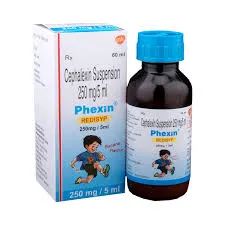
PHEXIN REDISYP Cephalexin 250 MG Cephalosporin Antibiotic USAGE, Administration
Description
Generic Name: Cephalexin (250 mg per 5 ml) — a broad‑spectrum antibiotic of the first‑generation cephalosporin class.
Brand / Form: Phexin Redisyp 250 mg Suspension (flavoured syrup for oral use)
Strength: 250 mg of Cephalexin per 5 ml of reconstituted suspension
Dosage Form: Oral syrup / suspension
Route of Administration: Oral (by mouth)
Therapeutic Class: Antibiotic – Cephalosporin
How It Works
Cephalexin (the active ingredient) is a bactericidal antibiotic that works by inhibiting bacterial cell wall synthesis. Without an intact cell wall, bacteria cannot survive, which helps eliminate the infection.
Common Uses
PHEXIN REDISYP 250 mg is used to treat various bacterial infections, including:
Respiratory tract infections (e.g., tonsillitis, pharyngitis, bronchitis)
Middle ear infections (otitis media)
Skin and soft tissue infections
Urinary tract infections (e.g., cystitis)
Bone and joint infections (e.g., osteomyelitis)
Dental infections (in some cases)
Phexin Redisyp 250 mg is an antibiotic used to treat various bacterial infections, including those of the respiratory tract (tonsillitis, bronchitis), skin, soft tissues, urinary tract (cystitis), ear, and bones. It contains cephalexin, which works by killing bacteria and stopping their growth.
Respiratory Tract Infections: Treats infections like tonsillitis, pharyngitis, and bronchitis.
Skin and Soft Tissue Infections: Used for infections of the skin, such as cellulitis.
Urinary Tract Infections (UTIs): Treats conditions like cystitis and prostatitis.
Ear Infections: Used for middle ear infections (otitis media).
Bone and Joint Infections: Used for bacterial infections affecting bones and joints.
Dental Infections: Effective for bacterial infections in dental parts.
Respiratory Tract Infections
Tonsillitis, pharyngitis, bronchitis, pneumonia caused by bacteria.
Ear Infections
Middle ear infections (otitis media).
Skin and Soft-Tissue Infections
Boils, abscesses, cellulitis, infected wounds.
Urinary Tract Infections (UTIs)
Cystitis or other bacterial urinary infections.
Bone and Joint Infections
Certain bacterial infections affecting bones or joints (e.g., osteomyelitis).