
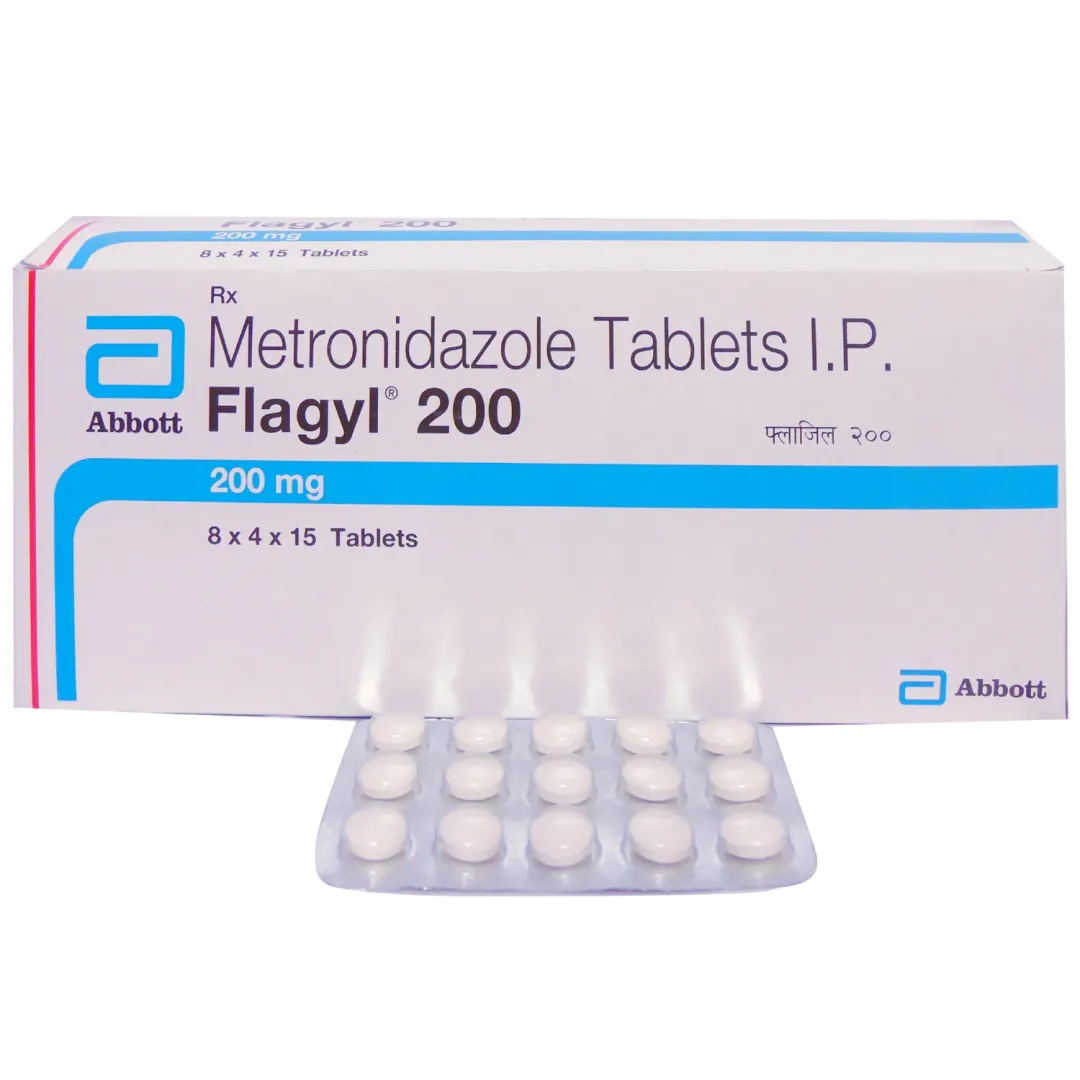
FLYGYL Metronidazole Tablets IP 200 MG Dosage, Usage, Mechanism of Action
Description
Brand Name :
Flygyl 200 mg Tablet
Generic Name :
Metronidazole 200 mg
Drug Class :
Antibacterial & Antiprotozoal (Nitroimidazole class)
Formulation :
Oral Film‑coated Tablet
Strength :
200 mg (per tablet)
Mechanism of Action :
Inhibits DNA synthesis in susceptible anaerobic bacteria and protozoa, stopping growth and killing the organisms
Metronidazole :
Metronidazole — the active ingredient in Flygyl — is a widely used antibiotic and antiprotozoal medicine effective against certain anaerobic bacterial and parasitic infections. It works by entering the microorganisms’ cells and damaging their DNA, preventing replication and leading to their death.
FLYGYL 200 mg contains Metronidazole, a nitroimidazole antibiotic and antiprotozoal medicine.
Protozoal Infections
Amebiasis – intestinal or liver infection caused by Entamoeba histolytica
Giardiasis – caused by Giardia lamblia
Trichomoniasis – urogenital infection caused by Trichomonas vaginalis
Anaerobic Bacterial Infections
Effective against anaerobic bacteria (bacteria that grow without oxygen)
Used for infections of:
Gastrointestinal tract
Gynecological tract
Oral/dental infections
Mixed Infections :
Sometimes combined with other antibiotics for mixed protozoal and bacterial infections
Flagyl 200 Tablet (containing Metronidazole) is an antibiotic and antiprotozoal medication used to treat bacterial and parasitic infections, including those of the stomach, intestines, liver, pelvis, brain, lungs, skin, and bones. It is also effective for treating giardiasis, trichomoniasis, bacterial vaginosis, gum infections, and infections following surgery.
Key Uses of Flagyl 200 Tablet :
Intestinal and Liver Infections: Used for treating amoebiasis (parasitic infection of the colon) and giardiasis.
Gynecological Infections: Treats bacterial vaginosis and pelvic infections, such as those caused by the Trichomonas parasite.
Dental and Oral Infections: Effective against severe gum infections and dental abscesses.
Anaerobic Bacterial Infections: Targets bacteria that thrive in low-oxygen environments, affecting the blood, brain, lung, or bones.

