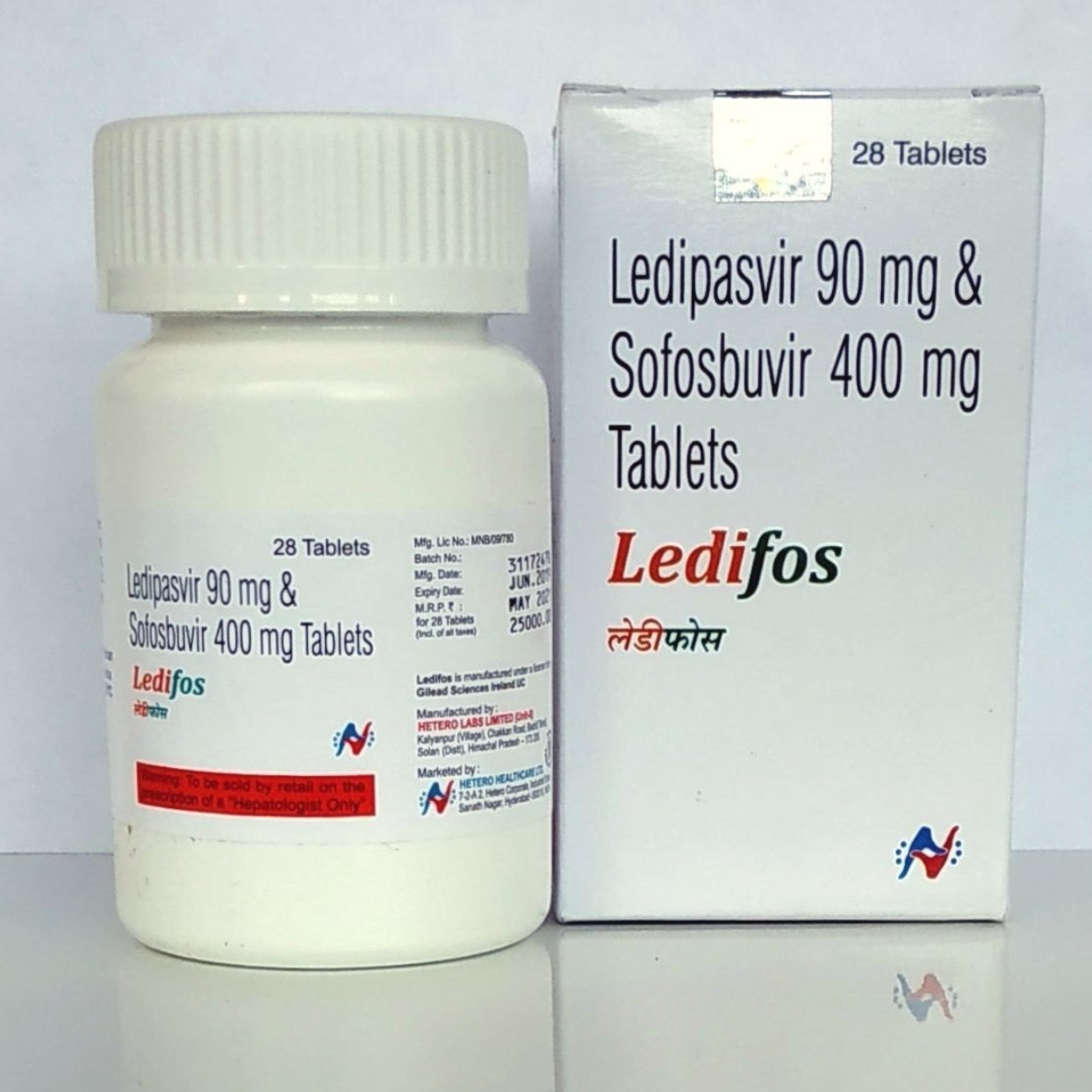
Ledipasvir (90mg) + Sofosbuvir (400mg) Ledifos USA FAST DELIVERY| Doses, In India
Used for the treatment of chronic Hepatitis C virus (HCV) infection, particularly genotype 1, and in some cases genotypes 4, 5, and 6.
How It Works:
-
Ledipasvir: Inhibits the HCV NS5A protein, essential for viral replication.
-
Sofosbuvir: Inhibits the NS5B RNA-dependent RNA polymerase, an enzyme vital for the virus to replicate.
Together, they stop the virus from multiplying and help clear the infection.
Typical Usage:
-
Once daily oral tablet.
-
Usually taken for 12 weeks, but duration may vary based on liver condition and previous treatments.
Common Side Effects:
-
Fatigue
-
Headache
-
Nausea
-
Insomnia
-
Diarrhea
Precautions:
-
Not recommended with certain drugs (e.g., rifampin, St. John’s Wort).
-
Use with caution in patients with renal impairment.
-
Not typically used as monotherapy—intended as part of combination treatment.
Brand Info: INDIA
-
Ledifos is a generic version often used in India and other countries with generic licensing from original manufacturers.
🔍 Summary of Ledifos (Ledipasvir 90 mg + Sofosbuvir 400 mg)
Ledifos is a fixed-dose antiviral medication used to treat chronic hepatitis C virus (HCV) infection, particularly genotype 1, 4, 5, and 6. It is a direct-acting antiviral (DAA) combination:
-
Ledipasvir: NS5A inhibitor — blocks HCV replication.
-
Sofosbuvir: NS5B polymerase inhibitor — stops viral RNA replication.
Key Points:
-
Oral administration, typically once daily.
-
Used in adults and some pediatric patients.
-
High cure rate (SVR >95%) after 8–12 weeks of treatment.
-
May be used with or without ribavirin depending on liver condition (e.g., cirrhosis).
-
Fewer side effects than older interferon-based therapies.
1. Medical Applications
-
Use in global HCV eradication programs.
-
Investigating effectiveness for additional genotypes or coinfections (e.g., HIV/HCV).
-
Pediatric formulation development.
-
Real-world effectiveness in special populations (e.g., renal impairment, transplant patients).
2. Healthcare Strategy
-
Inclusion in government-sponsored HCV treatment plans (e.g., India’s National Viral Hepatitis Control Program).
-
Use in mobile clinics for HCV in rural areas.
-
Affordable generic production for low- and middle-income countries.
3. Public Health Campaigns
-
Education drives about curability of HCV with DAAs.
-
Screening + same-day treatment initiation programs.
-
Community outreach to intravenous drug users or high-risk populations.
4. Research & Development
-
Resistance pattern monitoring (NS5A resistance mutations).
-
Combining with newer DAAs for pan-genotypic regimens.
-
Investigating shorter duration therapies (e.g., 6 weeks in low viral load cases).
5. Business & Policy
-
Health economic analysis showing cost-effectiveness over long term.
-
Patent landscape and implications for generic competition.
-
Partnerships between pharma companies and public health agencies.