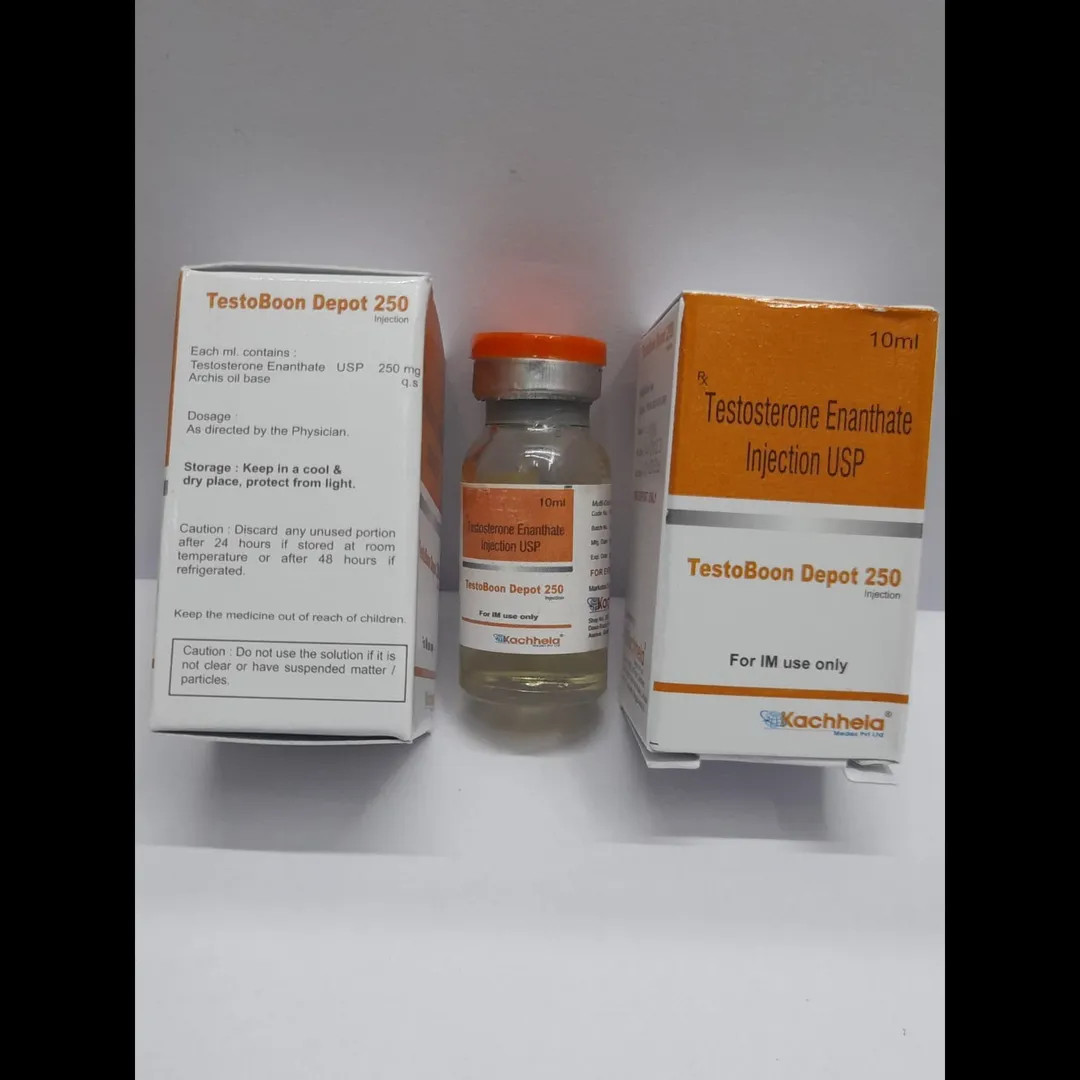
Testoboon Depot 250 contains Testosterone Enanthate, a long-acting ester of testosterone used as an androgen replacement medicine. Testosterone enanthate may be prescribed for adult males with appropriately diagnosed testosterone deficiency or conditions associated with inadequate endogenous testosterone production.
Treatment should be initiated only after appropriate medical evaluation and confirmation of testosterone deficiency. Testosterone therapy requires qualified medical supervision and periodic monitoring, which may include testosterone levels, hematocrit, blood pressure, prostate-related health, lipid profile and other clinically relevant parameters.
20 FAQs
-
What is Testoboon Depot 250?
Testoboon Depot 250 contains testosterone enanthate, a long-acting testosterone ester used for medically indicated testosterone replacement. -
What is the active ingredient?
The active ingredient is testosterone enanthate. -
What is the strength of Testoboon Depot 250?
The product is presented as 250 mg testosterone enanthate; the exact concentration and vial/ampoule volume should be confirmed from the manufacturer's packaging. -
What is testosterone enanthate used for?
It may be prescribed for adult males with appropriately confirmed testosterone deficiency associated with an underlying medical condition. -
How is testosterone enanthate administered?
It is administered by intramuscular injection according to the applicable product information and healthcare professional's instructions. -
Is Testoboon Depot 250 a prescription medicine?
Testosterone medicines are prescription products and may be subject to controlled-substance requirements in some countries. -
Who should determine the dose?
A qualified healthcare professional should determine the dose and treatment interval based on laboratory results, symptoms, diagnosis and individual response. -
Does testosterone therapy require blood tests?
Yes. Monitoring may include testosterone levels, hematocrit and other tests considered appropriate by the treating clinician. -
Can testosterone enanthate affect hematocrit?
Yes. Testosterone therapy can increase red blood-cell production, so hematocrit may need periodic monitoring. -
Can testosterone therapy affect blood pressure?
Testosterone treatment may increase blood pressure in some patients, making blood-pressure monitoring appropriate. -
Can testosterone enanthate affect fertility?
Yes. Exogenous testosterone can suppress sperm production and may reduce fertility during treatment. -
Can testosterone be used for bodybuilding?
Testosterone enanthate should not be used for non-medical performance enhancement. It should be used only for an appropriate medical indication under professional supervision. -
Can testosterone therapy affect the prostate?
Testosterone therapy can affect prostate-related parameters. Appropriate patients may require prostate assessment and monitoring. -
What are possible side effects?
Possible effects include acne, fluid retention, changes in mood or libido, increased hematocrit and changes in reproductive function. Individual responses vary. -
Can testosterone enanthate be used in women?
Testosterone therapy is not routinely indicated for women and should only be considered for specific medical circumstances under specialist supervision. -
Can testosterone enanthate be used during pregnancy?
Testosterone is not appropriate during pregnancy because androgen exposure can harm fetal development. -
Can testosterone enanthate interact with other medicines?
Yes. It may interact with certain medicines, including anticoagulants and some medicines affecting glucose metabolism. All medications should be disclosed to the clinician. -
How should Testoboon Depot 250 be stored?
Store it according to the manufacturer's labeled storage conditions and keep it away from children. -
Can the injection interval be changed independently?
No. The treatment interval should be determined by the prescribing healthcare professional based on the patient's clinical response and laboratory monitoring. -
Is Testoboon Depot 250 available internationally?
Availability, registration, approved indications and controlled-substance requirements vary by country and should be verified under local regulations.
Keywords